30 September 2008

jesus wants to save christians

Rob Bell and Don Golden, Jesus Wants to Save Christians (Grand Rapids: Zondervan, 2008).

A few reviews have already been published regarding Rob Bell's latest book, so I'm not entirely sure what I can contribute to the conversation in terms of originality. I especially agreed with the review posted on jesuscreed.

I tend to be a fan of Rob Bell's whenever I run across his work. Most are familiar with the NOOMA video series, and the many times I have been asked to give my opinion regarding them for use by various churches and small groups I have responded in the affirmative. Further, I think that Rob Bell's previous book efforts have been, though not without fault, very good reads. Having said that, I believe that the content he offers here is a solid statement and challenge for the church. This is by far his best book so far and should be read and discussed by church leaders and laity alike. (And, yes, the blocks on the cover are pretty cool and you should have to figure it out for yourself. . .)

In the opening chapter, Bell/Golden propose a reading of the story of Scripture in such a way that Exodus (the book and event) is understood as the beginning. This does not discount Genesis, but rightly sets forth the notion that the biblical story is one of exodus for the oppressed. Further, he sets forth the story of Israel in the context of four geographical locations: Egypt, Sinai, Jerusalem, Babylon. These four locations work to demonstrate the arc of Israel's storyline as an exodus motif - the enslavement, exodus, empire, exile.

Chapter Two addresses the Babylonian exile and the emerging hope of a return and restoration for Israel. The reading here is faithful to the biblical text and the context of Second Temple Judaism. Much of this chapter is given to the prophetic voice which was present during this time period, emphasizing the hope for those oppressed over and against the imperialism which dominated the political scene. Chapter Three then turns this hope to the fulfillment found in Jesus. Again, I am impressed with the presentation and detail of historical motifs emerging from the Second Temple period in Bell's discussion. This "David's other Son" idea is developed well in the context of messianic expectation.

Of note with these two chapters, however (and this has been mentioned elsewhere and was particularly striking during my read-through) is that Bell barely interacts with any secondary literature on the topic. His perspective has obviously been influenced by perspectives such as N. T. Wright, yet Bell/Golden never acknowledges nor interacts with such writing in his book. This is a major disappointment for me, and almost displays a lack of concern for academic rigor. I'm not asking him to present a doctoral dissertation here, but some credit and interaction would be quite fruitful.

From this point, Bell/Golden covers the movement of the gospel in the early church (Chapter Four). Here he demonstrates the cultural significance of its outward movement, and the radical shift from the Judaism of this period to the universal message of salvation found in the church.

Chapter Five bounces from Revelation's message of kingdom against anti-kingdom (christ against anti-christ) into our modern world. I appreciate his statistics regarding the reality of poverty in the world and the sharp pain that is felt in war. While his biblical reading is quite accurate, his perception of current events demonstrates a few large holes in understanding the nature of recent history. Interestingly, this lack only amounts to a few paragraphs and the book could have easily been written without them. But they are present nonetheless. His provided possible 'american' responses to those who oppose our country (119) are hardly the only perspectives which could be given and are, quite honestly, reductionistic within the context of his argument. But this (believe it or not) is a minor quibble, because Bell/Golden refuse to decry America simply for who it is, yet is honest enough to point out its faults as they are revealed by Scripture.

The final chapter ("Blood on the Doorposts of the Universe") is simply brilliant. Bringing together the themes which have been developed throughout the book, Bell/Golden call the church to be the church in light of the story of Scripture and the kingdom of Christ. Building on the concept of Eucharist, his aim is to show how the church is called to be the presence of Christ into the world by bringing the fulfillment of hope, peace and the new humanity.

Finally: I, too, am tired of overly-used white space in the book. This may have been cool and interesting once (kind of twice), but is really just becoming annoying. The only redemption on this is that I didn't really have much time to read this book and was happy to see pages with ten words where there could have been fifty. But even then, it wasn't redemptive.

23 September 2008

una voce


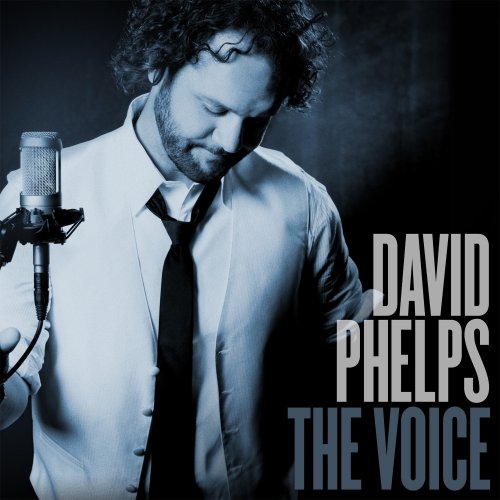
Let me begin by placing a few statements on the table.  To begin, I like David Phelps - he has an incredible voice and a strong musical talent along with a very likable personality.  I mean, if you haven't heard his version of O Holy Night, then you've never really heard the song!  Second, I am not accustomed to reviewing musical albums, so I probably won't have the necessary insight which better qualifies others for this job.  The main reason here is not that I don't understand music but rather that I believe that the overwhelming amount of popular music (CCM or otherwise) is boring and uninspired right now.  So, I only really pay attention to a few artists and tend to critique their albums as "really awesome" (as in, "That new DC*B album is really awesome!").

Having said that, ever since I received the much-anticipated new release from David Phelps I knew that something had to be said.  David is probably the best musician who's never found a great album.  Aside from projects with the Gaither Vocal Band, he has struggled along trying to find some musical focus to what he's released.  And The Voice is a monumental step backwards on his journey.  I am really struggling to figure out just how these 11 tracks fit together (they really don't, but I have some theories).

When listening to the 11 songs, there are a few which are good, two which are great and the rest which should never have been included in the first place.

1. "I Want to Know What Love Is" - Yes, a Foreigner cover.  But this actually works on a certain level.  I consider it one of the good ones because it isn't one to listen to over and over again.

2. "Angel" - A Sara McLaughlin cover.  Why, David?  Why?

3. "I Just Call You Mine" - New Song.  This one is good and has the feel of Adult Contemporary radio.

4. "Nessun Dorma" - Puccini.  This is absolutely outstanding.

5. "End of the Line" - New.  Hated the sound of the track, only listened to the whole thing once.

6. "Moonlight" - New words set to a Beethoven sonata.  Alright.

7. "Unchained Melody" - I like it and think it works really, really well.

8. "Higher" - I think this is a song about an overcoming faith, but when heard with the title of the project, it is hard not to think that this is an overly confident career statement.

9. "Angel Band" - This is interesting, I'm not sure what to label it on a stylistic end. . .but it kind of works and kind of doesn't.  Perhaps in an album with a more focussed arc it could have been brilliant.

10. "Fly to You" - Banjos and bluegrassy theme which is ultimately drowned out by full orchestration, it highlights some of David's identity challenges which come from him having a diverse background and career.

11. "Your Love" - New and simple.  This might be one of the best tracks on the list because he creates something which is quite pleasant to have listened to (this highlights another major flaw in the album).

So, what is David Phelps trying to do with the album?  I have no idea, really.  Other than a smattering of songs that he likes or has wanted to record, there is no connectivity here.  And it will prove to be a problem that he named the album The Voice because it nowhere shows up in any metaphorical sense - leading the listener to think that perhaps he realizes what a great instrument he has been given and can easily rely on this instead of his own artistry.  (I doubt this is the case, but that's the impression given.)

Perhaps it is the American Idol season that can never be: You have (1) the updated cover of an old song; (2) the updated cover of a kinda old song; (3) the sappy championship song; (4) the blow 'em out of the water with something unique yet amazing song; (5) the shouldn't have done it, I'm in the bottom three this week song; (7) the Unchained Melody cover because it's Simon's favorite song; (8) something for Simon to refer to as 'indulgent'; (11) a beautiful ballad to quiet the noise of a hectic competition.

Again, the voce migliore (best voice) which hasn't found its place in the world.  At the end of the day, David Phelps should be taking lightweights (by comparison) like Josh Groban to task on these.  He has a much superior instrument but has yet to produce an album which will cause the world to take notice.  To date his best effort is One Wintry Night, 2007's Christmas release, which actually stands in as a really good effort - one that would never have received such harsh criticism.

22 September 2008

interstate [batteries] love song

While watching a national news channel Sunday evening, we saw this come across.  Pretty cool.


17 September 2008

recovering pharisees 2: paths to power

There is an interesting essay by Martin Pickup entitled, "Matthew's and Mark's Pharisees" in Jacob Neusner and Bruce D. Chilton, eds., In Quest of the Historical Pharisees (Waco: Baylor University Press, 2007), 67-112. As part of his chapter, Pickup provides an analysis of the Pharisees in Jewish society.

Especially within Mark's gospel, the Pharisees are not presented as having any sort of political power or authority - or even 'holding religious office' (71). Throughout the narrative they must join together with the Herodians in trying to take care of the Jesus situation. This means, I believe, that while they are not happy about Israel's position of exile under the Roman government they nevertheless must find ways to work with the system in order to get what they want. It is a peculiar situation which reflects much of our world today - proving again my assertion that we are not as far from the Pharisees as we would have ourselves believe.

Notice that this is evident in that the Pharisees 'have no direct involvement in Jesus' arrest and trial' (71). Somehow, Jesus' most constant source of criticism and opposition fade away when the story arrives at its climax. This could be because Jesus and the Pharisees were really about the same idea - the restoration of Israel - although they differed greatly in their interpretation of Torah. The sacrifice of atonement was never questioned throughout the gospel, although additional laws of ritual were often at the forefront of controversy.

Further, although they are a very visible sect of purity and righteousness, the Pharisees are not presented as having any control over the synagogues (cf. 71). Their influence seems to come from their visible dedication to Torah and purity, often initiating the right discussions among the right people at the right times in steering the ship of Israel's restoration. But then they are able to get out of the way of the political and military machine which they will denounce as standing in the way of Israel's vindication.

The Pharisees' power seems to come from their voice - the ability to rouse public opinion and focus on matters which they deem important for the nation. This is not too far from many evangelicals, who have used the fellowship of the saints as a means for advancing various agendas which may or may not reflect sound biblical doctrine. And this is done to the division of the church, for it draws lines which make it quite difficult to accept a brother or sister in Christ through the haze of activism. And, when the need for true atonement arrives, they are the first ones fading into the woodwork.

16 September 2008

proof of hell

A young woman returned home early from a date with a long look on her face.  Her mother asked her what was bothering her.  The girl explained, "My boyfriend just proposed marriage."

Her mother asked, "What's so bad about that?"

The girl answered, "He also told me he is an atheist.  He said there is no way he could ever believe there was a hell."

The mother consoled her daughter: "Don't let this bother you.  Marry him anyway.  With a little time and between the two of us, we will be able to convince him there is a hell."

15 September 2008

the shack


Currently making some waves is this novel by William Young, who has done so without the aide of a major publisher nor national exposure - until it reached #1 on the NYT bestseller list. What is more, the book has been raising eyebrows for many within the church for its unique portrayal of God, tragedy and the human response. Since I do not often read fiction, I will not attempt to provide a critique of the literary sort. That would be better left to those who might know what they're talking about. So I can honestly say that I have no concept of how this writing measures up to the current (or historical field). I can say that I enjoyed the prose, and that the first four chapters were written well enough that I didn't want to have to read them (now that I have my own daughter).

But what about the thematic content? There is much within this book that will make both the nominal and the committed believer uncomfortable. Whether it is the anthropomorphic description of the Trinity or the need to forgive well beyond what we consider human nature. Whatever the case, I believe that there is something great contained in these pages if one wants to have their perceptions of God pushed and stretched.

1. The portrayal of the Trinity: when the main character, Mack, first encounters God he sees three distinct figures. What might be initially unsettling to the reader is said also to be the case with the protagonist - the Father is found as a large black woman, known as 'Papa'; Jesus a Middle Eastern man dressed as a laborer; the Spirit as a wiry Asian-looking woman gardener. I have heard some complaint over this, but it must be by people who've not actually read the book. For in the story, Mack is clearly told that 'Papa' is neither male nor female but that he comes to us in the way in which we need him most. This, I believe, is consistent with the mixed metaphors found throughout Scripture in which God is portrayed as fathering but also texts which speak in terms that can be classified as motherly action. Also, within the story this figure changes for just this very reason.

2. The devastation of depravity: I mentioned above that this book's opening chapters were difficult to read. This is because it explains Mack's dilemma - his youngest daughter is abducted during a family vacation and brutally murdered in a shack deep in the Oregon mountains. Although the story is told from Mack's perspective (thus sparing the details of the abduction), it is unnerving to think about the pain which families who find themselves in such horror are experiencing. The author does not allow this to be a simple story of loss and redemption. Rather, he exposes great depths of human loss and pain - the result of a real and present evil in the world. And, frankly, many believers need to be reminded of the real pain that torments so many. . .The Great Sadness of the human heart.

3. The power of forgiveness: Mack is invited to the shack in order to meet with God and deal with the pain in his life. There are three major areas which he must confront - his relationship to God, his relationship with his own father, his relationship with his daughter's killer. He is taken on a journey of hurt and healing in order to discover life and redemption. At so many points the main character must fight against and through issues which plague so many of us. How do we embrace God in a world of darkness and evil? Where is he to judge and to exact revenge? How is it possible to truly forgive? (And, no, there is no easy answer given in the book.)

The great value of reading a fictitious portrayal is that the standard theological categories don't hold up. Within the symbolism and characterization there is a truer fluidity than is capable within systematizing our thoughts. And so the boundaries get moved and stretched until we are moved and stretched. The conclusions reached in this book are not perfect, nor are they always found in the typical consensus of the academy - in other words, not everyone will agree with every point in the book (if that were the case, it would be boring). So I am not saying that this book is without fault, but I am not looking for those areas anyway. Instead, I want to encourage readers to approach the discussion openly so that it could actually be a discussion. And to see, along with Mack, how much our conceptions of God need to be smashed in favor of something wholly other and bigger than ourselves.

14 September 2008

big Z

Carlos Zambrano and his no-hitter on Sunday, September 14, 2008.

11 September 2008

presentee christology


It has been suggested that much of Luke-Acts (especially Acts) is written with the theological perspective that the early church now has seen Jesus go away and is trying to cope with how this is a supposed *victory* over the world.  In other words, the church must now figure out how the resurrection is meaningful, and how we are going to make it through until the return of Christ back to his people - in which case he will then establish his reign and rule over the world.  This has serious ramifications for our understanding of the text, its historical circumstance, the development of Christian theology, and the manner in which churches are built up in the present.

But this reading, though often prevalent, does serious injustice to what Luke is trying to say in the text.  Luke does not give us an *absentee christology* like so many would like to assert.  This completely misses the portrait which is given through the Gospel, that Jesus' ministry is concerned with the full restoration of Israel and that his resurrection is the definitive act in establishing his vindication to reign over creation.  His ascension in Acts 1 is not the removal of Christ from the church, but his enthronement over the powers which work against God in the world.  And thus he is able to send his Spirit to every believer - building up the church, comforting and guiding in the work of the kingdom, and making his presence available to all creation.

Thus, through the church - the entity which is given as the working of Christ's kingdom in the world - he is establishing his dominion of life and light into death and darkness.  So, it is not as though Luke is scrambling around to construct a theology which will keep his community optimistic about the future.  Instead, he writes a narrative full of discovery that the true reign of God, the fulfillment of the hopes of Israel, have come into the present world (on this, see many works by N.T. "Bishop of Awesome" Wright).  The conflict which comes demonstrates the fulfillment of Israel's covenant (Jervell), but also the battles which serve to define an 'in-between' period before the ultimate realization of the kingdom.

If Jesus is then God's Messiah - the one who has been exalted to share in the power and dominion of Yhwh - then the storyline of Acts is built upon the realization of Israel's restoration has broken into the world.  Acts 3:21 serves to highlight this regarding Jesus: ". . .who must remain in heaven until the time of universal restoration that God announced long ago through his holy prophets."  The fundamental idea of holiness which moves outward from the point of interaction with Yhwh (once the Temple; now the Spirit) continues onward in new profundity along Luke's narrative.

07 September 2008

thriller

Yesterday I flew to London.  Tomorrow I'll be at a conference with Tilling.  The only thing I can do now is watch covers of Michael Jackson hits.